



Fire Rated Roller Shutters
 Export Worldwide
 Made in the UK
 Made to Measure
 Supply and Fit Nationwide
Enhanced Safety with Fire Rated Roller Shutters From £1,390 + VAT
Robust Fire Resistance and Automatic Integration: Our Fire Rated Roller Shutters are not just about robust construction; they are a critical component in enhancing fire safety measures. Designed to conform to BS EN 16034:2014 standards, these shutters provide a fire resistance level rated between 60–240 minutes. They integrate seamlessly with existing fire systems for automatic activation, ensuring effective response in the event of a fire.
Options Tailored to Your Needs:
- Single Skin Shutters: A practical, cost-effective solution for essential fire resistance.
- Twin Skin Shutters: These offer superior protection by significantly reducing thermal transfer, keeping areas cooler and safer.
Dual Benefits – Safety and Security: Constructed from thick steel, our fire-rated roller shutters provide not only fire resistance but also an impressive degree of security. This makes them an ideal choice for various settings, including:
- Industrial Use: Warehouses and manufacturing plants benefit greatly from the added safety and security.
- Commercial and Public Buildings: Commercial buildings including schools, hospitals, shopping centres, and restaurants also utilise these shutters for their dual functionality.
Customization for Unique Architectural Needs: Recognising the diverse needs of different premises, we offer the flexibility of manufacturing fire shutters in a horizontal configuration when required.
If you’re looking for a more discreet solution that better prevents the spread of smoke, our fire curtains may be more suitable.























View Our Range of Fire Rated Roller Shutters
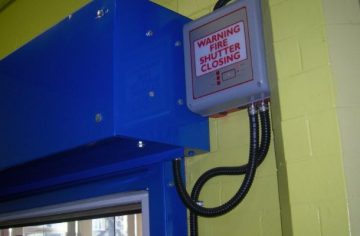
Single Skin Fire Roller Shutters
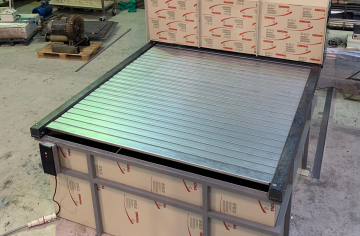
Steel Horizontal Roller Shutter (HZT-01)
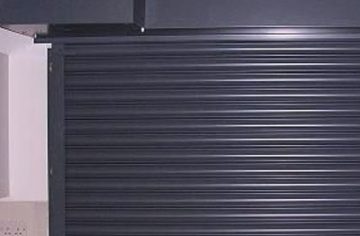
Twin Skin Fire Roller Shutters

Use our Product Finder to help select the perfect roller shutter or call us on +44 (0) 1384 221743
Our range of fire-rated shutters comes in various ratings – 60, 120, or 240 minutes, catering to diverse fire protection needs across various premises. Whether it’s a warehouse, factory, kitchen, school, or office, our fire roller shutters are designed to enhance safety in these environments.
At UK Roller Shutters, we tailor the manufacturing of these shutters to be compatible with both three-phase (415V) and single-phase (240V) power supplies, ensuring they meet the specific power requirements of your site.
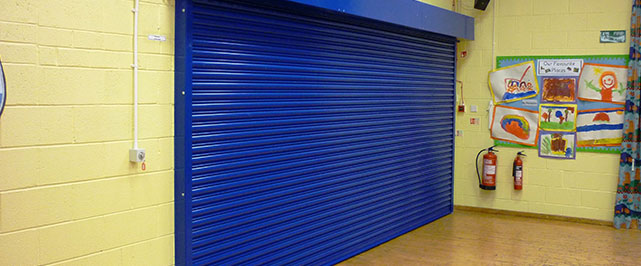
How Fire Rated Roller Shutters Work
A fire rated roller shutter stays rolled up for everyday access, then closes automatically when the building’s fire alarm or a heat-activated release triggers it. Once closed, it holds back flames, hot gases and, depending on the specification, radiant heat, so a fire stays in the compartment where it started.
How They Activate
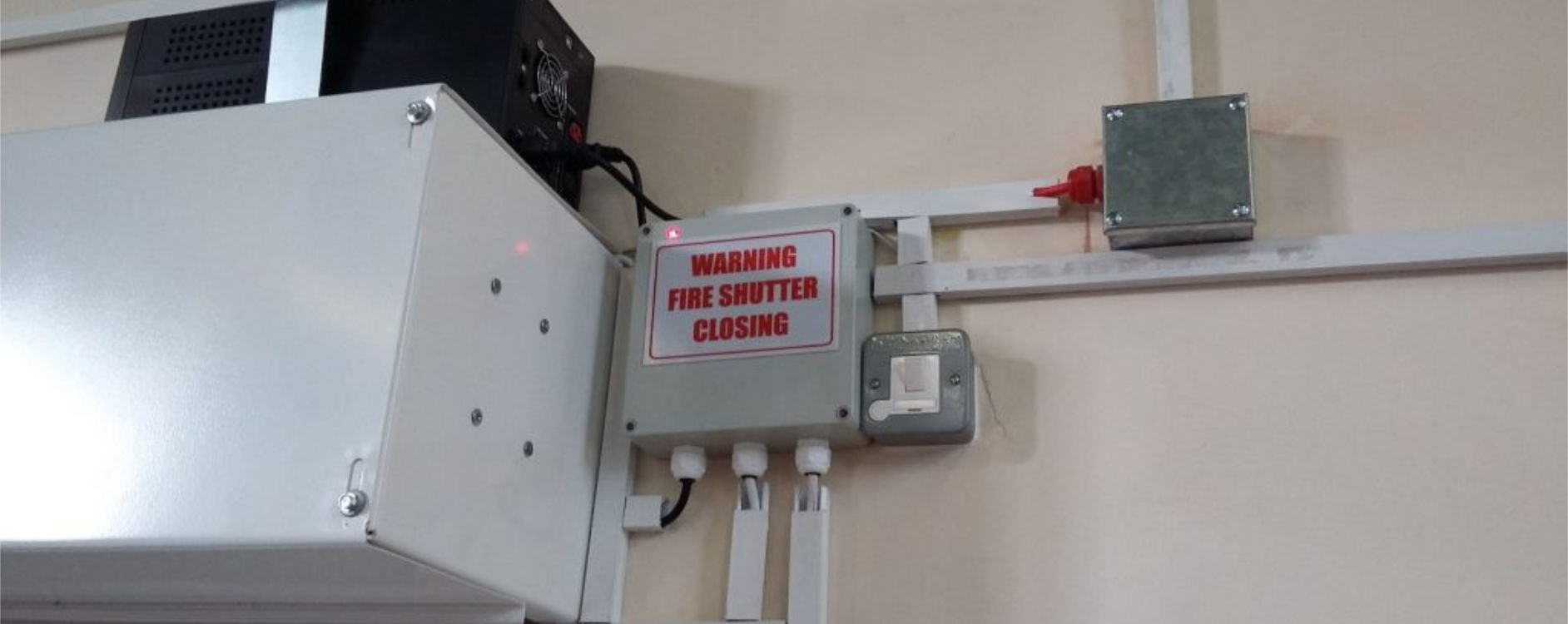
- Fire alarm interface: The shutter connects to your fire detection and alarm system through a dedicated interface panel. When the alarm signals, the shutter is released and closes automatically. Interfaces between fire alarms and door release mechanisms are covered by BS 7273-4, and the alarm system itself by BS 5839-1.
- Heat-activated backup: Where specified, a fusible link or thermal release closes the shutter if the alarm signal is lost, with no power or signal needed.
- Fail-safe closure: The shutter is designed to close under its own weight and at a controlled speed. A governor or brake limits the descent so the shutter closes reliably without slamming.
What Happens in a Power Cut
Fire shutters are fail-safe. If mains power is lost, the shutter can still close. Battery backup keeps the control panel and motor running for a set period, and manual operation lets trained staff reopen the shutter after an incident. We confirm the right power and backup arrangement at survey.
Fire Resistance Ratings Explained
Fire shutters are tested to BS EN 1634-1 and classified under BS EN 13501-2:2023. The letters in a rating tell you what the shutter has proven it can do.
| Classification | What it measures | What it means in practice |
|---|---|---|
| E (Integrity) | Stops flames and hot gases passing through | The basic level of fire resistance, typically rated for 60 to 240 minutes |
| EW (Integrity and radiation) | Integrity, plus limits radiant heat on the far side | Protects people and stock near the shutter, with radiant heat limited to 15 kW/m² at one metre |
| EI (Integrity and insulation) | Integrity, plus limits temperature rise on the far side | The highest level of protection, for escape routes and where combustible materials sit close to the opening |
| S (Smoke leakage) | Limits smoke passing through the closed shutter | Smoke control is classified separately and is not covered by every fire shutter. For smoke containment, see our fire curtains |
Built-In Safety Features
- Obstruction detection and safety edges: The shutter stops and reverses on contact during normal operation.
- Emergency release and manual override: The shutter can be operated safely if the drive fails.
- Safe by design: Powered shutters are designed to BS EN 12453 for safety in use, with safety devices to BS EN 12978.
Testing, Commissioning and Handover
Every fire rated roller shutter is tested on installation to prove it closes correctly from the alarm signal. At handover you receive the CE/UKCA declaration of performance, test and classification evidence, a commissioning certificate and operating instructions. Keep these on file as part of your fire safety records.
Standards We Work To
| Standard | What it covers |
|---|---|
| BS EN 16034:2014 | Product standard for fire resisting and smoke control doors and rolling shutters used in compartmentation and escape routes |
| BS EN 1634-1 | Fire resistance test method for door and shutter assemblies |
| BS EN 13501-2:2023 | Fire classification (E, EI, EW, S) |
| BS EN 13241 | General product standard for industrial and commercial doors |
| BS EN 12453 and BS EN 12978 | Safety in use of powered doors, and safety devices |
| BS EN 12604 and BS EN 12635 | Mechanical aspects, installation and use |
| BS 7273-4 and BS 5839-1 | Fire alarm interface and fire detection systems |
| BS 9999 and BS 9991 | Fire safety design guidance for buildings |
Regulations That Apply
- Construction Products Regulations: Fire resisting shutters must carry CE and/or UKCA marking, supported by a declaration of performance.
- Building Regulations (Approved Document B): Sets when fire-resisting compartmentation is needed in non-domestic buildings.
- Regulatory Reform (Fire Safety) Order 2005: In England and Wales, the Responsible Person must keep fire safety measures, including fire shutters, maintained and in working order. Scotland and Northern Ireland have their own equivalents.
- PUWER 1998 and the Supply of Machinery (Safety) Regulations 2008: Powered shutters are work equipment and must be safe, maintained and inspected.
- Building Safety Act 2022: For higher-risk buildings, records of fire safety installations form part of the “golden thread” of information.
Where Fire Rated Roller Shutters Are Used
Fire rated roller shutters suit openings that must stay clear for daily use but seal completely in a fire. The right specification depends on what the opening is for, who or what sits close to it, and how long the building needs to hold a fire back.
Common Applications
- Compartment walls: Fire shutters close openings in walls that divide a building into fire compartments, so a fire cannot spread from one area to the next.
- Loading bays and goods openings: Wide openings that move goods and vehicles through a fire-resisting wall are a natural fit, as a roller shutter rolls up out of the way.
- Kitchens and serveries: Serving hatches and counter openings can be sealed automatically, keeping a kitchen fire away from dining areas and escape routes.
- Retail unit fronts and mall separations: Shutters close off a unit from a shared mall or common area, protecting neighbouring units and the people in them.
- Plant rooms and service areas: Higher-risk rooms can be isolated from the rest of the building when they need access for engineers.
- Car parks: Where a car park sits beneath or alongside other uses, fire shutters help separate it from the rest of the building.
- Escape route protection: Shutters seal openings next to escape routes. Where people may need to pass through, the design must follow the building’s evacuation strategy, which we review at survey.
Choosing a Specification by Application
| Application | What to consider | Typical specification |
|---|---|---|
| Warehouses and factories | Wide openings, high fire load, goods and forklift traffic | Single skin, with the fire rating matched to the compartment |
| Commercial kitchens | Heat and grease near the opening, staff close by | Single skin, or twin skin where radiant heat is a concern |
| Retail units and shopping centres | Public nearby, units sharing common areas | Twin skin where people or stock sit close to the shutter |
| Escape route openings | People moving close to the closed shutter | Twin skin, so radiant heat on the far side is kept down |
| Plant rooms | Higher fire risk, limited access | Single skin, matched to the compartment rating |
The right classification is set by your fire risk assessment and, on new work, by building control or your fire engineer. We confirm the opening, rating and activation arrangement at survey.
Fire Shutters by Sector
- Industrial and warehousing: Large compartments with high fire loads need reliable, alarm-linked closure, and shutters that stand up to regular use. Powered shutters are covered by PUWER, so inspection and maintenance matter as much as the original installation.
- Schools and education: Fire safety design for schools follows Building Bulletin 100. Controlled descent and obstruction detection are particularly important where children are close to openings.
- Hospitals and healthcare: Healthcare buildings are designed around Firecode guidance (HTM 05-02), where compartmentation protects patients who cannot easily evacuate. Fire shutters must work reliably with the building’s fire alarm.
- Hospitality and food service: Kitchens, bars and servery hatches combine heat, cooking fuel and public areas close by. Automatic closure keeps a kitchen fire from reaching dining areas and escape routes.
- Retail, offices and public buildings: Shutters protect openings between units, back-of-house areas and common spaces where large numbers of people may be present.
Fire Safety Shutter FAQs
What are fire rated roller shutters?
Fire rated roller shutters are advanced protective doors designed to withstand high temperatures and impede the spread of fire. They are equipped to descend automatically in the event of a fire alarm, adding an essential layer of safety. Besides their primary function in fire protection, these shutters also serve as robust security features for your premises, providing defense against break-ins and unauthorized access.
Why should I choose a fire rated shutter?
Choosing fire rated shutters is crucial for enhancing safety in environments prone to fire risks, like kitchens or factories, and for adhering to specific safety regulations. They also add an extra layer of security to your property.
Can fire rated shutters be customized for my premises?
Absolutely! We specialize in customizing fire rated shutters to meet various architectural designs and operational needs, suitable for a range of building types.
How often do fire rated shutters need maintenance, and what are the legal requirements?
Electrically operated shutters must be serviced annually as per the Health and Safety at Work Act, ensuring they remain in optimal condition and comply with legal safety standards.
Are roller shutters fire-rated?
Not every roller shutter is "fire rated", but "fire shutters" are specially designed to withstand fire for a specified period, typically between 60 to 240 minutes, depending on the model and certification. They help compartmentalise fire, allowing for safer evacuation and emergency response.
How much do fire-rated shutters cost?
They typically start from about £1,390 but can go up to thousands of pounds depending on the size and security rating.
Do fire-rated roller shutter doors fall under PUWER?
Yes, if motorised, fire-rated roller shutters fall under PUWER, meaning they must be regularly inspected and maintained for safety.
What is the British standard for fire shutters?
British Standards for fire shutters include BS 476-22 and BS EN 16034, which ensure they meet fire safety requirements.
What are the disadvantages of fire-rated roller shutters?
Fire-rated shutters can be heavy and require regular maintenance. Modern fire shutters nearly always need power. An alternative to fire shutters is fire curtains, which are thinner and made from materials like Kevlar. However, fire curtains do not provide security, whereas fire shutters can offer both security and fire protection, though they are bulky. Another disadvantage is that fire shutters are not entirely smoke-resistant—while they help reduce smoke spread, some smoke can still pass through gaps.
Do fire-rated roller shutters stop condensation?
Some fire shutters can be insulated, providing sound and thermal insulation, but they are not intended for condensation control.
Do fire shutters need power?
Some fire shutters require power, but many have fail-safe mechanisms like gravity drop systems to function during power outages.
How much should I budget for fire-rated shutters?
Budget at least £1,390 before installation, with costs rising depending on size, rating, and installation needs.
Who is exempt from PUWER?
PUWER applies to workplaces where fire-rated shutters are installed. Domestic properties and certain sectors, like ships and aircraft, may be exempt due to separate regulations. However, in commercial or public buildings, PUWER compliance is mandatory.
Is it a legal requirement to have fire-rated roller shutters serviced?
Yes, UK fire safety laws require regular servicing of fire-rated shutters to ensure they function properly.
What is a fire-rated louvre?
A fire-rated louvre allows airflow but closes during a fire to stop flames and smoke from spreading.

+44 (0) 1384 221743

UK Roller Shutters Ltd
Unit 41
Wombourne Enterprise Park
Bridgnorth Road
Wombourne
United Kingdom
WV5 0AL
Get in Touch
We offer a wide range of roller shutters suitable for a number of different applications. All that choice may be confusing which is why we’re happy to offer a no-obligation consultation.
Our roller shutter supplier experts will discuss your requirements with you, and help you to choose the right roller shutters.
Get in touch today for a free quote.